Contribute your thoughts to our annual insights report 💬
TAKE A QUICK SURVEYChristmas in July: Get ahead on your 2026 holiday marketing

Most people think of Christmas in July as a one-off stock-shifting shopping event. But marketers should look at it as a marketing test-run for the high-pressure winter holiday season.
Who celebrates Christmas in July, and where did the holiday come from?
The origins of Christmas in July are hotly debated. If we take a look at Christmas in July's history, some people trace it back to a 1933 mock-Christmas party at Keystone Camp in Brevard, North Carolina.
Other people trace its point of origin back to the 1940 Preston Sturges comedy Christmas in July, which popularized the phrase. Others connect the holiday to the weather patterns of the Southern Hemisphere, where July is actually winter (Australia, New Zealand and South Africa). These parts of the world celebrate Christmas with turkey and log fires during the cold winter months.
Retailers officially adopted Christmas in July as a sales tactic in the 1950s, with department stores in the 1980s and 90s using the event as a strategy to sell off excess winter inventory during a slow sales season — consulting marketers to help them creatively move products off the shelves.
In the current decade, Christmas in July gives marketers a unique opportunity to test campaigns, messaging and promotions before winter budgets are fully committed, allowing them to test marketing strategies and approaches before committing to their Q4 budget allocations.
Lessons in advertising: Christmas 2025
What can you learn from last year’s UK & US Christmas ads? Get the exclusive report with our tips and takeaways.
Christmas in July is no longer a marketing or retail novelty. Consumers are pacing their festive shopping, using sales throughout the year to build out their festive gift stash, while retailers are stretching out their holiday planning cycles. This gives marketers the perfect opportunity to try out holiday messaging, offers and creative before the pressure of the Q4 holiday season.
Retailers have a longer holiday planning cycle
Holiday campaigns often begin development months in advance, with most marketing teams dedicating three to six months to their festive marketing roll outs. This matches trends on consumers’ festive buying habits, with 31% of shoppers in 2026 saying they’re planning to do their holiday shopping earlier this year than usual.
Christmas in July marketing provides marketers with a low-pressure environment to experiment, allowing them to test new, unusual or innovative concepts and campaigns before they allocate spend to marketing for the high-pressure festive season.
Consumers are conditioned to expect deals year-round
Consumers have come to expect shopping events and sales to take place throughout the year. Prime Day and summer sales have expanded shopping behavior beyond November and December. 28% of consumers say they're committing to shopping across multiple sales events outside of the holiday season.
Mid-year campaigns can reduce holiday risk
Christmas in July advertising is also a strategic way to reduce holiday campaign risk. Testing messaging and creative in July can help avoid costly Q4 mistakes. Strategic teams use pre-launch testing cycles to iterate and build on creative campaigns. AI-based tools can deliver insights in days, not weeks — making July an ideal testing window for teams with tight Q4 timelines.
The insights gathered on campaign performance during July give teams a great baseline for festive campaigns, giving them an in-depth understanding of how to connect with consumers and drive sales across channels.
From clearing out excess winter stock to building out audiences they'll rely on to drive sales in November and December, savvy brands treat Christmas in July as more than a one-off sale — using it as an opportunity to lay the groundwork for a strong festive season.
Inventory clearance strategies
As I note in the intro, retailers originally adopted Christmas in July as a move that allowed them to clear excess winter stock and make room for next year's inventory. Retailers like QVC still use this strategy to shift stock throughout July.
Bundling and limited-time offers, rather than straight discounting, are often the most effective way to test messaging, campaigns and creative for the upcoming festive season throughout the summer.
Demand generation before peak season
Many retailers are shifting their sales calendars to earlier in the year to effectively target consumers earlier in their shopping journey, with less competition from other retailers.
Take Amazon. The online retail giant has been pulling its sale calendar to earlier in the year. The retailer moved its popular Prime Day event from July to June in 2026. This aligns with consumers’ typical purchase journey: “view peaks” (during which consumers browse products) typically precede purchase peaks by several days across the sectors.
Building owned audiences
July gives marketers a great opportunity to build their owned audiences, with the summer months allowing you to grow email lists and loyalty memberships ahead of the holidays.
This gives you time to nurture your audience, build positive brand associations and give new customers a great shopping experience, helping them build trust in your brand before the high spend tied to the festive season.
Long-term customers are 50% more likely to try new products and spend 31% more with a brand during the festive season compared to first-time holiday shoppers.
Christmas in July also gives brands several low-stakes opportunities to test, verify and prove the effectiveness of their holiday creative, concepts, offers and messaging.
Testing holiday creative concepts
Christmas in July gives you the opportunity to test consumers' reactions to themes, offers and holiday messaging. This gives you reliable data on which to build your high-pressure holiday campaigns — an insights-led foundation that lets you test, analyze, optimize and create continually across your work.
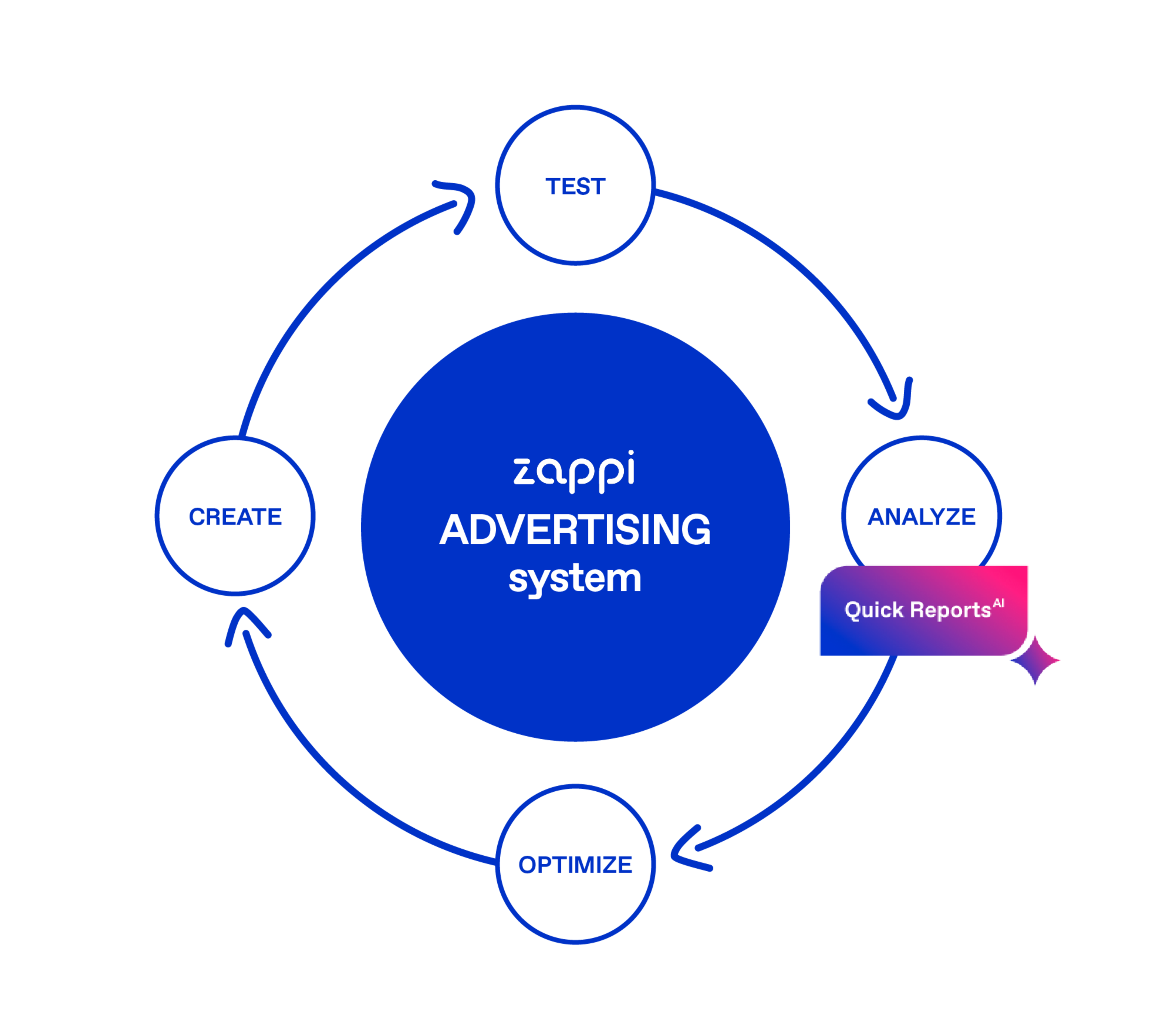
AI-based consumer insights platforms like Zappi can take traditional research cycles from weeks or months to days, typically delivering insights in as little as 12 hours.
Use our suite of advertising tools to test and analyze the impact of different creative elements including taglines, characters, audio and story arc. You can also use Zappi to test the emotional resonance of your creative, isolating consumers' second-by-second emotional responses to your ads.
Experimenting with promotional mechanics
Christmas in July also allows you to test different promotional mechanics. You can experiment with a range of different discount tactics to see which works best for your audience, including heavy discounting, BOGOF, free gifts with purchase and exclusive sales for loyal VIP customers. Test early to see which approaches result in the most sales and highest average order values.
You can also test discounting techniques across product categories. This year, Amazon experimented with different discount strategies across categories for Prime Day 2026.
Here's a breakdown of Amazon's approach:
Electronics: 24% off (up from 23% in 2025)
Apparel: 24% off (flat compared to 2025)
Appliances: 16% off (flat compared to 2025)
Toys: 20% off (up from 19% in 2025)
Run free shipping threshold tests to assess at which minimum spend customers will add more to their baskets without abandoning their carts. A/B test different dollar variations, such as targeting one group with free shipping over $75 and another group with free shipping over $100.
Developing social-first campaigns
Christmas in July is also a great time to develop the basis of your Q4 social campaigns, allowing you to test concepts, creative, influencer partnerships, targeting and schedules across social media.
Purchases on social media are up.
While social media still acts as the foundational starting point for many consumers' customer journey — from spotting a new sweater on their favorite influencer to catching a sale announcement on payday — many consumers are now choosing to make their first purchase there too. 15% of consumers say social media is now their go-to platform for making holiday purchases, up more than 2 percentage points on last year.
When it comes to your content, playing with nostalgia-based, unexpected summer-holiday mashups is a great way to trigger a dopamine hit of delight and surprise in consumers as they scroll their socials. Think: iced hot chocolate and eggnog recipes, retro sweater-prints on summer tees and dresses and Christmas synth-pop in the background of your reels.
Christmas in July acts as your holiday campaign sandbox — giving you a contained space to test out creative, messaging and offers with consumers without the weight of Q4 budgets or expectations.
Pressure-testing creative before Q4
Testing holiday campaigns in the summer is a smart way to learn what type of creative resonates best with audiences without peak-season pressure during the festive season.
"July isn’t just an arbitrary checkpoint, it’s the final window to refine creative without compromising media deadlines or production quality. The brands that consistently win the Christmas ad season aren’t the ones who go viral by accident. They’re the ones who plan, test and optimize months in advance.
For marketers (and especially CMOs) Christmas is actually won or lost in July. The festive ads that consumers fall in love with in November? They’re the result of data-driven decisions made during the heat of summer." - Kelsey Sullivan, Senior Content Marketing Manager at Zappi
The Association of National Advertisers names creative quality as one of the main drivers of ad effectiveness. Testing early and often gives brands the chance to improve creative, fix messaging and reduce risk before rolling out their global holiday campaigns. This early testing supports brands to strategically allocate their budgets and optimize creative before launch.
Identifying top-performing audience segments
Christmas in July also gives you the chance to test creative, offers and wider campaigns with different audience segments — giving you the chance to identify your top-performing segments for festive holiday targeting and prioritize media spend heading into Q4.
Use Zappi to cut your data across multiple levels of demographic or psychographic variables. You can use our advanced filter interface to create variables based on saved filters, segmenting data based on several condition combinations such as age, gender, screener questions or brand-created tags.
Build ads around these top-performing audience segments and create different variations that feel uniquely personalized to each segment.
Establishing benchmarks for the holiday season
Testing in July gives you a benchmark, helping you to develop data-backed performance expectations for your festive campaigns. This moves you away from improvisation and trying to find alignment between your creative and audience in real time, turning frantic reactivity into systematic proactivity across your November and December campaigns.
Zappi’s Amplify Advertising System is the perfect tool for helping forward-planning brands validate holiday messaging, creative concepts and promotional ideas in July, so marketers can enter the fourth quarter with confidence.
Christmas in July gives you the perfect low-stakes opportunity to test holiday messaging, creative and offers before the Q4 holiday season. Use July to test, rehearse and refine. And let your summertime data become the foundation for your successful winter campaigns.
Lessons in advertising: Christmas 2025
What can you learn from last year’s UK & US Christmas ads? Get the exclusive report with our tips and takeaways.


